
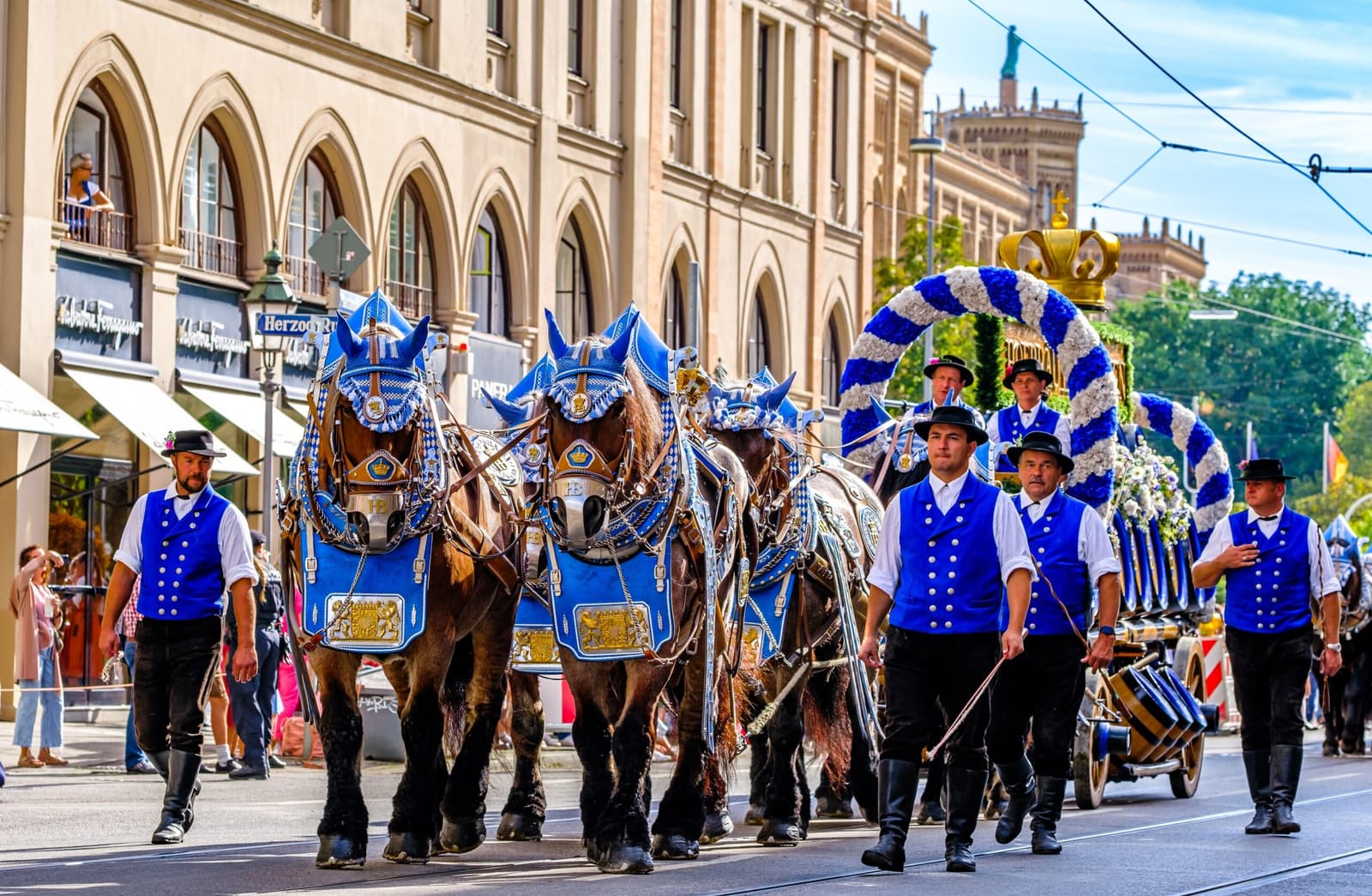
Oktoberfest, the world’s largest Volksfest (beer festival and traveling funfair), traces its origins back to October 12, 1810, when Crown Prince Ludwig of Bavaria married Princess Therese of Saxony-Hildburghausen. The citizens of Munich were invited to join in the festivities, which included horse races, and the event was such a success that it became an annual celebration. Over time, the festival extended into September to take advantage of the milder weather, but it still concludes in the first weekend of October.
Annual Celebration
Oktoberfest is held annually in Munich, Bavaria, Germany. The festival traditionally starts in mid-September and runs for 16 to 18 days, ending on the first Sunday in October. This timing ensures pleasant weather conditions, contributing to the enjoyment of the outdoor festivities.
Location and Venues
The primary venue for Oktoberfest is the Theresienwiese, a large open space in the heart of Munich named after Princess Therese. The area transforms into a bustling fairground with massive beer tents, amusement rides, food stalls, and various attractions. Iconic beer tents such as Schottenhamel, Hofbräu-Festzelt, and Augustiner-Festhalle are central to the celebration, each operated by one of Munich’s historic breweries.
Festival Highlights
Oktoberfest is renowned for its vibrant atmosphere, characterized by traditional Bavarian music, dancing, and a variety of cultural events. Attendees don traditional attire, with men wearing Lederhosen and women wearing Dirndls. The festival features parades, including the grand entry of the Oktoberfest landlords and breweries, as well as the traditional costume and riflemen’s parade. Visitors can also enjoy a wide array of Bavarian culinary delights, from pretzels and sausages to roast chicken and pork knuckles.
Global Impact
Oktoberfest’s influence extends far beyond Munich, inspiring numerous Oktoberfest celebrations around the world. Cities such as Cincinnati, Toronto, and Brisbane host their own versions of the festival, bringing a taste of Bavarian culture to a global audience. Despite these international renditions, the original Oktoberfest in Munich remains unparalleled in scale and authenticity.
Cultural Significance
Oktoberfest is more than just a beer festival; it is a celebration of Bavarian culture and tradition. The festival showcases the region’s heritage through its music, dance, attire, and culinary offerings, creating a sense of community and continuity. It attracts millions of visitors each year, making it a significant event not only for Munich but for the global cultural calendar.