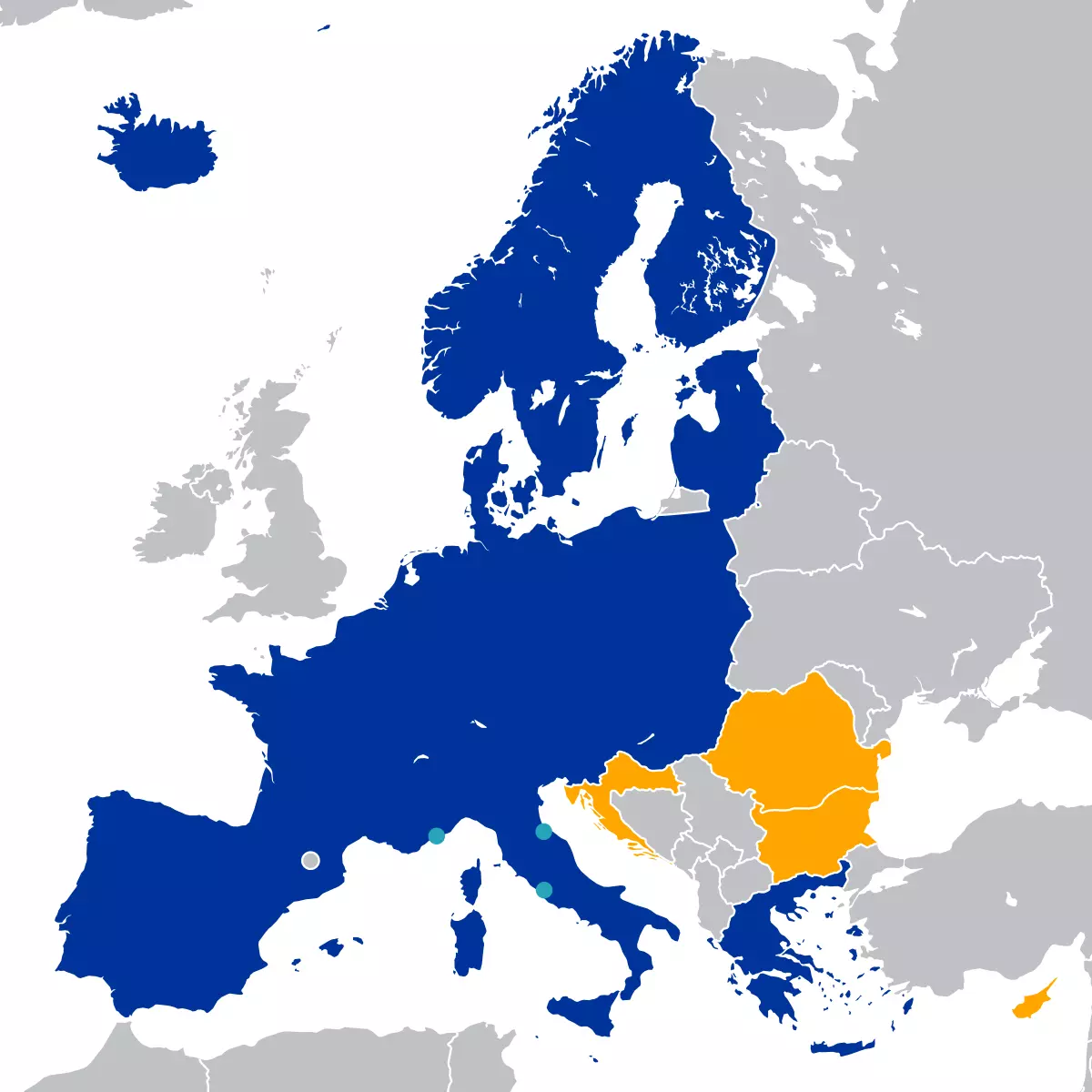
The Schengen area comprises 27 European countries that have abolished passport and other types of border control at their mutual borders, which allows for free movement of people, goods, services, and capital. This article is designed to provide immigrants and travellers with important information and advice on the healthcare systems in Schengen countries, so you can be prepared and knowledgeable about the healthcare available to you during your stay.
European Health Insurance Card (EHIC)
For travellers from European Union (EU), European Economic Area (EEA) countries, and Switzerland, the European Health Insurance Card (EHIC) is a free card that gives you access to medically necessary, state-provided healthcare during a temporary stay in any of the 27 EU countries, Iceland, Liechtenstein, Norway, Switzerland and the United Kingdom, under the same conditions and at the same cost (free in some countries) as people insured in that country.
Remember that the EHIC is not an alternative to travel insurance. It does not cover any private healthcare or costs such as a return flight to your home country or lost/stolen property.
Private Health Insurance
For non-EU/EEA immigrants and travellers, it’s generally recommended to purchase private health insurance coverage. There are numerous insurance providers that offer a variety of plans, so you should consider your personal health needs and risks, as well as the duration of your stay, when selecting an insurance plan.
Understanding the Local Healthcare System
Each country in the Schengen area has its own unique healthcare system. Some operate on a public insurance model, some on a national health service model, and others on a mix of the two. You can find some examples of local healthcare systems below:
Germany
Germany has a statutory health insurance system, where residents are required to be insured, and the cost of insurance is split between employers and employees. The healthcare system is funded by a combination of taxes, insurance premiums, and co-pays.
France
France operates a universal healthcare system, which is funded by the government through taxes. It provides a high standard of care and covers a wide range of treatments, although some costs may be partially covered and require out-of-pocket payment.
Netherlands
In the Netherlands, health insurance is mandatory. The government provides a basic level of coverage that includes a wide range of services, and individuals can choose to purchase additional coverage from private insurers.
Regardless of the country, make sure to understand how the local healthcare system works and what steps you need to take to access healthcare services.
Emergency Services
In any Schengen country, the number for emergency services is 112. This number is free of charge and can be dialed from a landline, payphone, or mobile phone even without a SIM card.
Medications and Pharmacies
Medications that are prescription in one country might be over-the-counter in another, and vice versa. Make sure you have an ample supply of any necessary prescription medicines, and confirm that your medications are legal in the Schengen country you’re visiting.
Pharmacies in Schengen countries are well-stocked and professional, but the language barrier can sometimes be an issue. It’s helpful to have the generic name of your medication, as brand names can vary.
Navigating the healthcare system in a foreign country can be challenging, but with a solid understanding of the resources available to you and how the system works, you can ensure that you have access to the healthcare you need. Always plan ahead, ensure you have proper health coverage, understand the local healthcare system, and take necessary precautions.